
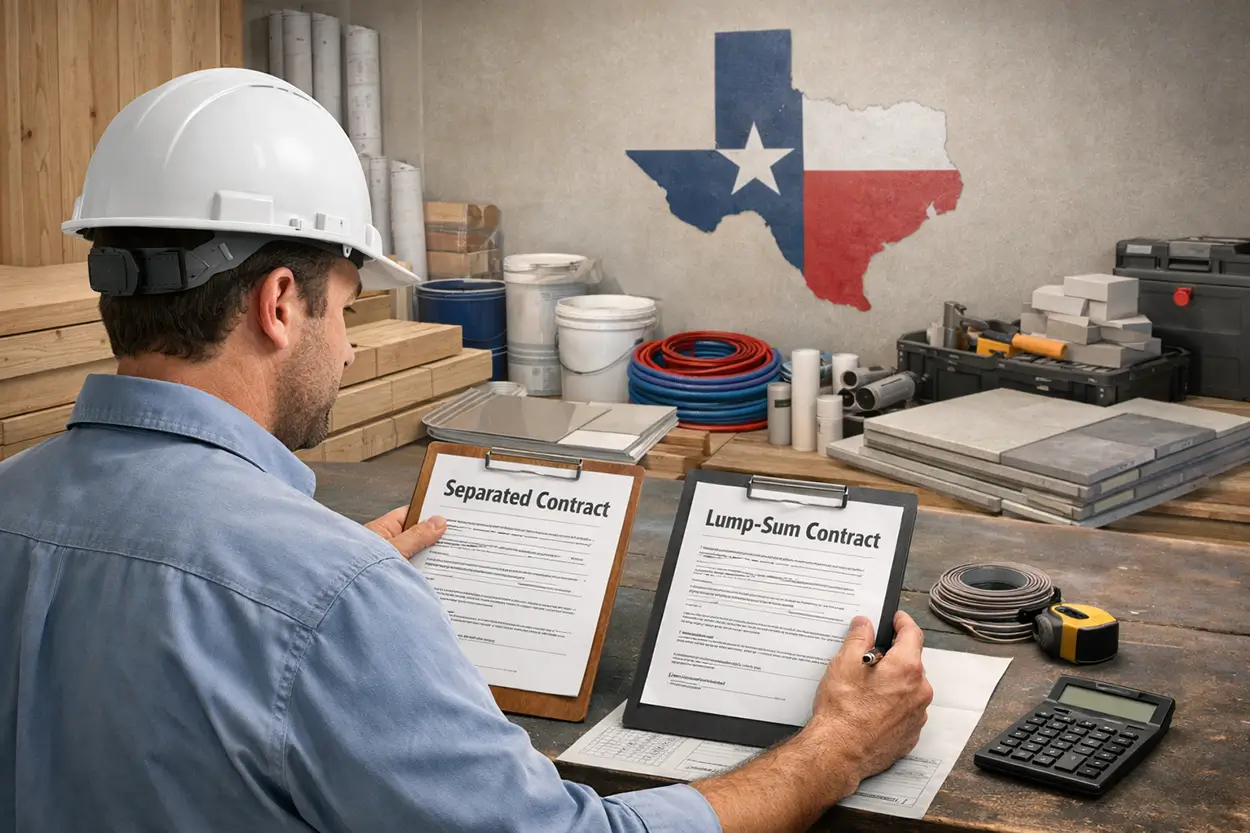
Contractors and remodelers across Texas deal with challenges that most other industries never have to think about. Sales tax rules are already complicated, but add construction work into the mix and the line between materials, labor, and taxable services gets even harder to navigate. And if you’ve ever tried calling the state for clarification? You probably ended that call with even more questions.
This is why understanding how sales tax for contractors are treated under Texas law really matters—especially for businesses serving the Spring area, where remodels and mixed-use projects happen constantly. The way a contract is written can change the entire tax structure of a job, so choosing between a separated or lump-sum contract isn’t just a paperwork preference. It directly affects compliance, pricing, and profit.
The Complicated Reality of Sales Tax for Contractors
Texas handles construction work differently from traditional retail. Contractors are treated as consumers of the materials they buy, even when those materials are being installed for someone else. Remodelers who work on existing structures often deal with taxable labor in Texas as well. New construction contractors do not.
Then there’s the question of whether the contractor can use a resale certificate in Texas. Sometimes the answer is yes. Sometimes it’s absolutely not allowed. And it all depends on the contract type.
Many businesses assume there’s a universal rule, but there isn’t. Residential versus commercial, remodel versus new build, capital improvement versus repair—they each come with different tax consequences. If contract wording doesn’t match what actually happened on the job, that’s when assessments hit.
How a Separated Contract Works
A separate contract spells out the cost of materials and the cost of labor on separate lines. This structure is often used because it’s more transparent, and contractors can buy materials tax-free using a valid resale certificate in Texas. But it also means the contractor must collect sales tax on the materials when billing the customer.
For remodelers, this can be a major advantage because taxable labor in Texas often applies to repair or renovation work. Itemizing charges lets the contractor follow the rules without guesswork.
There is a downside. Separated contracts have to be clear—very clear. If an auditor can’t easily tell what’s materials versus labor, the state can reclassify the entire job or disallow the resale exemption. Many compliance issues stem from sloppy documentation rather than intentional errors.
When a Lump-Sum Contract Makes Sense (and When It Doesn’t)
Some contractors prefer lump-sum contracts because customers like the simplicity. One total price—no detailed breakdown. But the simplicity ends there. Under a lump-sum agreement, the contractor pays sales tax at the time they buy materials. They cannot use a resale certificate for those items.
This creates a challenge: materials must be priced accurately in the contract. If material costs increase or a job requires more supplies than expected, the contractor absorbs the difference—including the tax.
Lump-sum contracts work well for projects with predictable material needs, but they can become risky for remodel-heavy work where unknown issues often arise.
Common Mistakes That Trigger Tax Assessments
Contractors run into problems when switching between contract types without adjusting how they buy materials. This often happens accidentally—especially when crews are busy, or paperwork is rushed.
Here are some mistakes that show up repeatedly:
- Using a resale certificate in Texas on a lump-sum job (big red flag)
- Forgetting that remodel work may involve taxable labor
- Charging tax incorrectly—or not at all—under a separate contract
- Working with tax-exempt clients and assuming the entire project is exempt
- Writing vague contracts that don’t clearly assign material and labor costs
Sometimes the contractor didn’t even know a rule existed. But the state still applies penalties, and during an audit, those penalties can add up fast.
Why Understanding Contract Structure Matters So Much
The difference between separated vs lump-sum isn’t just a format preference—it affects how much tax you pay, how much tax you charge, and how much profit remains at the end of a job.
For example:
- Remodelers in Spring who frequently deal with taxable labor may benefit from separate contracts.
- Contractors who want simplified billing might choose lump-sum contracts, but must plan material taxes into pricing.
- Businesses that serve both residential and commercial clients often need both contract types, depending on the project.
The biggest issue is consistency. If the paperwork says one thing but your material purchases say another, an auditor will assume the worst.
Why Professional Tax Support Makes a Real Difference
Most contractors are excellent at building, repairing, and managing job sites. But they shouldn’t be expected to memorize every detail of Texas tax law—especially when the rules shift depending on the type of work being done.
A tax specialist who understands sales tax for contractor regulations can help:
- Review contract templates
- Correct tax handling for each project type
- Avoid misusing resale certificates
- Prepare for possible audits
- Protect margins by ensuring tax costs are priced correctly
This isn’t about making things complicated. It’s about keeping your business safe from penalties and making sure jobs remain profitable.
Your Next Step Toward Clearer, Safer Tax Compliance
Deligans Tax Partners, LLC helps sales tax contractors across Texas understand state sales tax rules, structure contracts properly, and avoid costly mistakes tied to separated vs. lump-sum agreements. Whether you’re running remodels, repairs, or commercial projects in the Spring area, our team can guide you through tax compliance, contract planning, and long-term financial strategy. Contact Deligans Tax Partners, LLC today to strengthen your tax approach and protect your business from unnecessary risk.